News

Why Are Electromagnetic Relays Still Widely Used in Modern Industrial Control Systems?

2026-09-14 0 Leave me a message

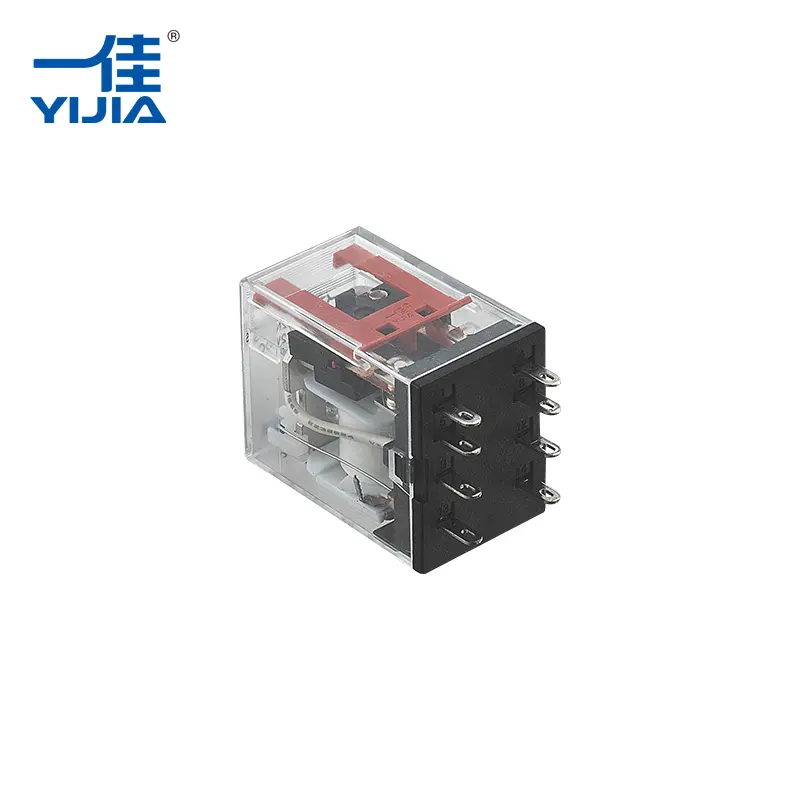
YIJIA Industrial Electrical Co., Ltd. examines why the Electromagnetic Relay remains common in industrial control systems despite the growth of solid-state and digital switching technologies.

Industrial control systems have changed significantly with PLCs, sensors, variable-frequency drives, remote monitoring, and networked controllers. Yet many control cabinets still contain conventional electromechanical relays. Their continued use is not simply a matter of older equipment design. In many applications, the basic relay structure still provides a practical combination of electrical isolation, straightforward switching, and flexible circuit control.

What Keeps Electromagnetic Relays Relevant?

The basic function of a relay has not changed: a relatively small control signal operates contacts in another circuit. This separation is useful when the controller and the controlled load have different electrical characteristics.

For example, a PLC output may not be intended to directly switch a motor contactor, solenoid, alarm circuit, or other load. A relay can sit between the controller and the load, providing an additional switching interface.

Three characteristics are particularly relevant:

  • Electrical separation between the control and load circuits
  • Mechanical switching through physical contacts
  • Multiple contact configurations for different circuit arrangements
  • These characteristics make relays useful even when the surrounding control system is highly automated.

    Electrical Isolation Remains An Important Requirement

    Modern automation equipment often combines low-voltage electronic control circuits with higher-voltage loads. These circuits need to interact without necessarily being directly connected.

    An Electromagnetic Relay uses a coil and contact mechanism to create this separation. When the coil is energized, its magnetic field moves an armature, changing the state of the contacts.

    The control circuit therefore operates the relay without directly carrying the load current through the controller output.

    Control Requirement Relay Function
    Separate control and load circuits Uses coil-to-contact isolation
    Switch a different voltage level Contacts operate independently of coil voltage
    Control multiple circuit paths Different contact configurations are available
    Provide a physical switching state Contacts visibly correspond to an electrical state

    This arrangement remains useful in control cabinets where different voltage levels and circuit functions are combined.

    Physical Contacts Still Have A Place In Industrial Equipment

    Solid-state switching has advantages in applications requiring extremely fast operation or very high switching frequency. However, physical contacts remain useful for many conventional industrial loads.

    A mechanical contact provides a clearly defined open or closed state. It can also be selected according to the required electrical load and circuit configuration.

    Common contact arrangements include:

  • Normally open (NO)
  • Normally closed (NC)
  • Changeover contacts
  • This flexibility allows one relay to perform different control tasks without changing the basic operating principle.

    For equipment designers, the choice is therefore less about whether mechanical or electronic switching is universally better and more about which technology fits the circuit.

    Why Relay Contact Configuration Matters

    Industrial machines rarely require only one type of switching action. A control signal may need to start one circuit while disconnecting another, or provide a status signal to a separate control input.

    A relay with changeover contacts can perform this type of switching through one mechanical movement.

    For example:

    Requirement Possible Contact Arrangement
    Turn a circuit on when energized Normally open
    Interrupt a circuit when energized Normally closed
    Transfer between two circuits Changeover
    Provide separate control paths Multiple contact sets

    This is one reason conventional relays continue to appear in machine control panels and electrical cabinets.

    How Switching Frequency Affects The Choice

    One important limitation of mechanical relays is that their contacts and moving parts experience physical wear. Every switching cycle involves movement of the armature and contact surfaces.

    For applications with relatively moderate switching frequency, this may not create a significant limitation. For equipment that switches extremely rapidly or continuously, designers may consider solid-state alternatives.

    The operating profile therefore matters.

    A relay may be appropriate when a system requires:

  • Periodic switching
  • Clear electrical isolation
  • Moderate switching frequency
  • Multiple contact configurations
  • Conventional control-circuit integration
  • The actual service life depends on factors such as load type, switching current, voltage, operating frequency, contact material, and environmental conditions.

    Contact Material Has A Direct Effect On Switching Performance

    When contacts open or close under load, the electrical conditions at the contact surface can produce heat, arcing, and material transfer. Repeated switching gradually affects the contact surfaces.

    For this reason, contact material is an important part of relay design.

    Silver-based contact materials are commonly used in electrical switching because of their electrical conductivity and suitability for contact applications. The appropriate material, however, depends on the electrical load and operating conditions rather than on material name alone.

    Contact performance is influenced by several factors:

    Factor Effect
    Current level Influences contact heating
    Voltage Affects arcing during separation
    Load type Inductive loads can create greater switching stress
    Switching frequency Determines how often contacts experience wear
    Contact material Influences conductivity and wear behavior

    This is particularly relevant in industrial equipment that operates repeatedly over extended periods.

    Relays Fit Easily Into Conventional Control Cabinets

    Another reason for their continued use is straightforward integration. Industrial control systems often contain established wiring architectures using terminal blocks, contactors, circuit breakers, PLCs, timers, and relays.

    A relay can be installed as an intermediate switching element without requiring major changes to the overall control concept.

    This is useful when:

  • Replacing a failed control component
  • Modifying an existing control circuit
  • Adding an additional output
  • Separating a controller from a load
  • Expanding machine functions
  • The familiar operating principle also makes troubleshooting relatively direct. Technicians can inspect the coil circuit, contact state, wiring, and connected load separately.

    Where Electromagnetic Relays Remain Common

    The continued use of mechanical relays is particularly visible in equipment where simple electrical switching is more important than extremely high-speed operation.

    Machine Control Panels

    Relays can interface controller outputs with motors, valves, indicators, alarms, and other electrical loads.

    Industrial Automation

    They can provide an intermediate switching stage between electronic controllers and field devices.

    Power Control Circuits

    Relays can manage auxiliary circuits and provide electrical separation between different parts of a control system.

    Equipment Retrofitting

    Existing machines may use relay-based control architectures that remain practical to maintain rather than being completely redesigned.

    Electromagnetic Relay Or Solid-State Relay?

    The increasing availability of solid-state relays has not eliminated mechanical relays. Instead, the two technologies are often selected according to different operating requirements.

    Consideration Electromagnetic Relay Solid-State Relay
    Switching mechanism Mechanical contacts Semiconductor devices
    Physical contact wear Yes No mechanical contact wear
    Electrical isolation Available through relay structure Available through electronic isolation design
    Switching speed Generally moderate Generally faster
    Heat behavior Depends mainly on contacts and load Semiconductor heat dissipation can be important
    Best fit Conventional industrial switching High-frequency or fast electronic switching

    Neither type is automatically suitable for every application. Load characteristics, switching frequency, isolation requirements, installation conditions, and expected service life should be considered together.

    Why The Basic Relay Design Has Not Disappeared

    Industrial automation does not always require the newest switching technology. Equipment often needs components that are easy to integrate, understand, test, and replace.

    The Electromagnetic Relay continues to meet these requirements in many control applications because its operating principle is simple: energize a coil, move a mechanical contact system, and change the circuit state.

    That simplicity also makes its limitations easier to identify. Contact wear, arcing, switching frequency, coil power, and load characteristics can all be evaluated during circuit design.

    As industrial control systems continue to incorporate PLCs, digital communication, and electronic controllers, mechanical relays remain useful where physical contact switching and circuit isolation are required. YIJIA Industrial Electrical Co., Ltd. produces industrial control components including relays, AC contactors, push button switches, signal lamps, and related products. The continued presence of the Electromagnetic Relay in modern control cabinets reflects a practical engineering choice: when the application calls for isolated, configurable mechanical switching, a conventional relay can still perform the required task without unnecessary complexity.

    Related News
    Leave me a message
    X
    We use cookies to offer you a better browsing experience, analyze site traffic and personalize content. By using this site, you agree to our use of cookies.Privacy Policy
    RejectAccept